
Green Building Technology & Materials
Green building technology and sustainable construction materials drive modern, resilient developments. Integrating Tesla solar panels, Powerwall battery systems, and geothermal HVAC efficiency delivers remarkable energy savings, increased durability, and lower operating costs. These advancements reduce environmental impact while maximizing investor returns through enhanced property value and operational efficiency.
Resilient and Rapid Construction
Key benefits of steel framing include:
Fire and Pest Resistance:
Faster Construction:
Durability and Stability:
Design Efficiency:
Sustainability:
Clean On-Site Energy Generation
Benefits of adding solar panels include:
Lower Energy Bills:
Solar power offsets a building’s electricity consumption, with surplus energy charging onsite batteries or fed back to the grid through net metering. The U.S. Department of Energy states that going solar significantly reduces monthly bills, allowing homeowners to recover upfront costs over time through energy savings.
Energy Independence:
Ample solar capacity enables developments to approach net-zero energy usage. In the Green Energy Estate projects, solar installations are designed to generate most of the community’s power, protecting residents and investors from volatile utility prices and grid disruptions.
Increased Property Value:
Solar panels add value to properties. Research shows that homes with solar sell for a premium, with Berkeley Lab noting an average resale value boost of around $15,000 for solar-equipped homes. This allows investors to command higher prices or rents due to built-in energy generation.
Environmental Impact & Incentives:
Each kilowatt of solar reduces a development’s carbon footprint by minimizing fossil-fuel electricity use. This aligns with sustainability goals and can lead to government incentives, tax credits, or faster permits for green technology. Additionally, it attracts eco-conscious buyers and tenants, enhancing marketability.
Energy Storage & Backup
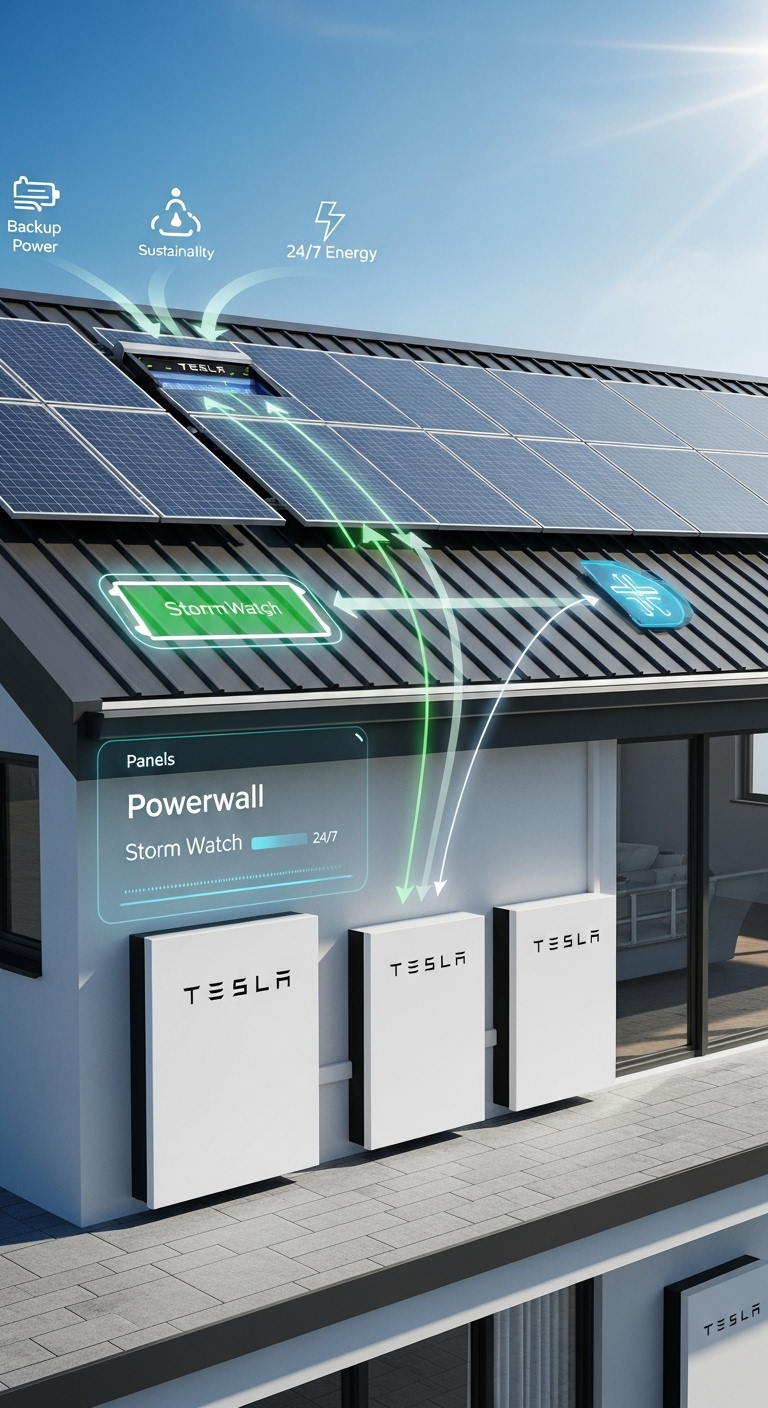
Solar energy faces challenges due to its intermittent nature, as sunlight isn’t always available. This issue is effectively addressed by Tesla battery systems, which store excess energy generated during sunny periods for use when the sun isn’t shining, ensuring 24/7 access to clean energy and reliable backup power. Energy storage enhances the system’s overall reliability and efficiency.
Key advantages of using Powerwall batteries:
- Round-the-Clock Clean Power:Powerwall units harness surplus energy from Tesla solar systems during the day, allowing homes to utilize stored solar power at night and creating a self-sustaining energy cycle.
- Seamless Backup During Outages:In case of grid failures, the Powerwall automatically activates to power essential appliances without interruption, providing invaluable resilience, especially in blackout-prone areas.
- Cost Savings & Peak Shaving:By discharging stored energy during peak utility hours, homes avoid higher costs associated with drawing from the grid in the evening, effectively lowering operating expenses.
- Energy Independence and Carbon Reduction:Pairing solar technology with Powerwalls allows buildings to rely minimally on the grid, significantly shrinking their carbon footprint and supporting the goal of sustainable, off-grid-capable development.
- Smart Management:The Tesla app enables homeowners to monitor energy usage and battery status, with features like Storm Watch that pre-charge the system for potential severe weather, optimizing performance and protecting their renewable energy investment.
Incorporating Powerwall battery units ensures that on-site solar energy is fully utilized and enhances the community’s resilience against outages. This adds value for investors by ensuring continuity for commercial tenants, reducing utility costs, and positioning these properties as cutting-edge, energy-independent assets, all while leveraging green building technology, green construction materials, Tesla solar technology, and geothermal HVAC efficiency.
High-Efficiency Climate Control
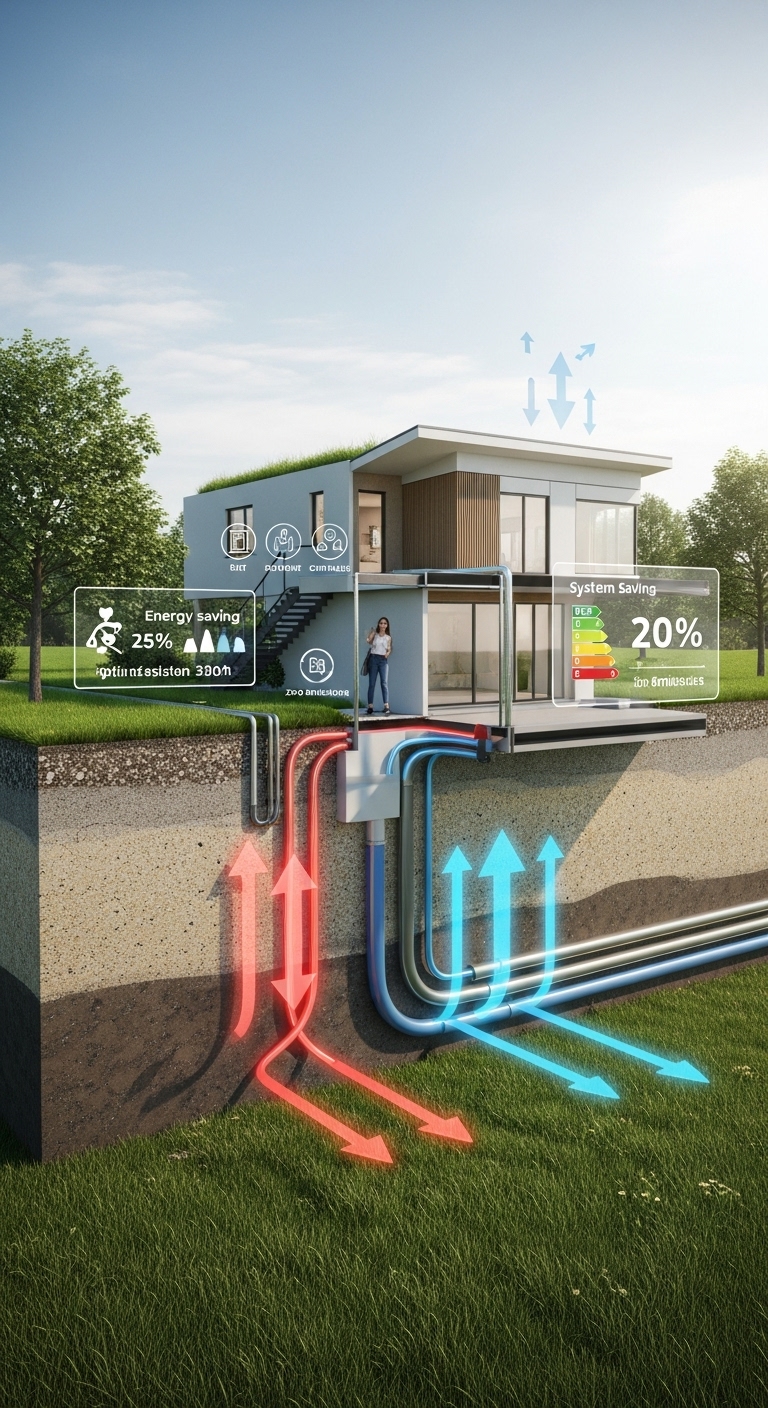
- Benefits of Geothermal HVAC Systems:
- Significant Energy Savings: Geothermal heat pumps can reduce heating bills by 30% to 60% and cooling costs by 20% to 50% compared to standard HVAC systems, often leading to a payback period of just 5–10 years. Owners then enjoy reduced energy expenses, enhancing net operating income.
- Year-Round Comfort: With the ground temperature remaining relatively constant (~55°F at shallow depths), geothermal HVAC delivers reliable heating and cooling throughout the year, ensuring consistent indoor comfort.
- Durability and Low Maintenance: These systems have a long lifespan, with underground loop tubing typically warrantied for over 50 years. Indoor units last around 20–25 years, resulting in fewer breakdowns and lower maintenance costs.
- Eco-Friendly Operation: Utilizing renewable thermal energy, geothermal HVAC systems eliminate on-site fossil fuel combustion, producing no direct emissions. Installing a residential geothermal system is equivalent to planting an acre of trees in terms of greenhouse gas reduction.
- Quiet and Unobtrusive: Geothermal systems operate quietly without noisy outdoor compressors, enhancing tenant comfort and reducing noise pollution.
Incorporating geothermal HVAC into both individual homes and district-level projects considerably lowers heating and cooling costs while providing ideal indoor environments. This not only stabilizes utility bills for residents but also offer investors efficiency gains and longer equipment life, reinforcing the development’s commitment to sustainability and green development.