Development Process:
A Disciplined, ESG-Aligned Framework for Sustainable Real Estate Execution
Development Process
At Green Energy Estate Fund, LLC, our sustainable real estate development process is built on a disciplined, transparent, and repeatable framework that delivers high-performance, resilient assets. For institutional partners and stakeholders, this means a system of governance, risk management, and value creation fully integrated with ESG principles. Our five-stage approach—from land acquisition to lifecycle management—ensures verifiable performance, risk mitigation, and superior long-term returns. This methodology is central to our Investment Strategy, embedding financial stewardship and environmental excellence into every project.
Stage 1:
Land Acquisition & Site Selection
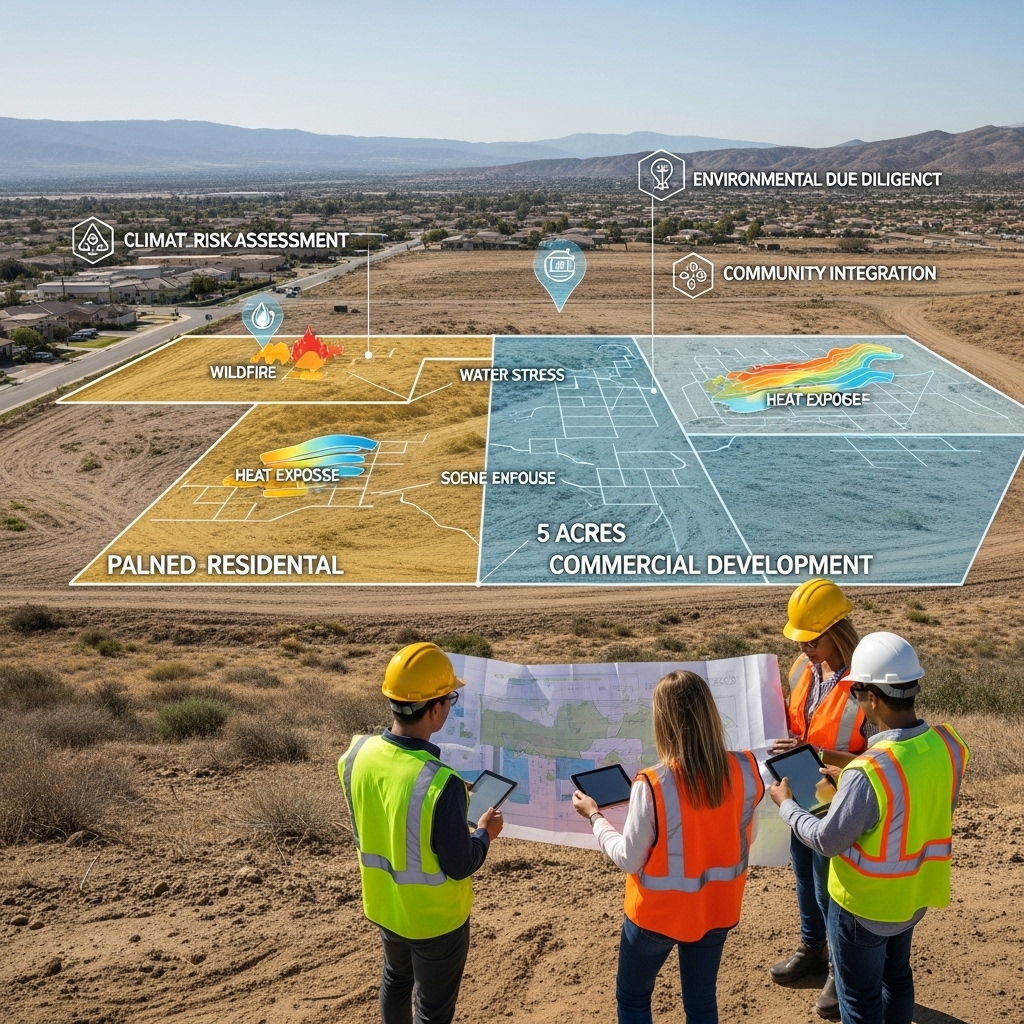
Our process begins with disciplined site selection, embedding climate resilience and environmental stewardship into our sustainable real estate development process. We target strategic growth corridors, like our 79-acre Palmdale project zoned for 74 residential and 5 commercial acres.
- Climate Risk Assessment: We conduct forward-looking climate risk analyses, evaluating exposure to wildfire, water stress, and extreme heat. This aligns with SASB’s focus on Climate Change Adaptation, quantifying risks to preserve long-term insurability and asset value.
- Environmental & Ecological Due Diligence: Comprehensive ESAs and biodiversity studies ensure ecological impacts are addressed, supporting SASB and UN SDG 15: Life on Land.
- Stakeholder & Community Integration: As a Palmdale sustainable development firm, we engage local planning, utilities, and community stakeholders early, de-risking entitlements and supporting UN SDG 11: Sustainable Cities and Communities.
Stage 2:
Entitlements & Permitting
We view California’s regulatory environment as an opportunity to enhance project quality and ensure timeline certainty. Our approach exceeds the state’s advanced building and environmental codes, future-proofing our assets.
- Systematic CEQA Navigation: We manage the CEQA process to secure Mitigated Negative Declarations, prioritizing environmental transparency and accountability.
- Advanced Code Compliance: Projects are designed for full compliance with CALGreen and Title 24, maintaining long-term market relevance. For details, visit USGBC
- Milestone-Driven Project Management: Clear timelines and milestones for approvals ensure transparency and disciplined execution, a hallmark of ESG real estate development California. This documentation supports high performance within the GRESB Management Component.

Stage 3:

Architectural Design & Engineering
Our design and engineering phase codifies our commitment to performance, resilience, and sustainability within our broader sustainable real estate development process. Each project features a high-performance technology package targeting Net-Zero Energy and LEED Platinum, validated through HERS ratings and Title 24 modeling.
- Integrated Technology Stack: Our projects combine LIVIO Steel framing, Tesla Solar, Powerwall storage, and geothermal HVAC, minimizing energy use and enabling participation in grid services and VPP programs, supporting UN SDG 7.
- Resilient Material Specification: We use non-combustible steel for climate risk mitigation, durability, and reduced maintenance, aligned with SASB’s climate adaptation strategies.
- Embodied Carbon Reduction: Prefabricated steel systems minimize waste and, with recycled content, significantly lower embodied carbon, supporting UN SDG 12.
Stage 4:
Construction Management & Execution
Sustaining Value Across the Green Building Project Lifecycle
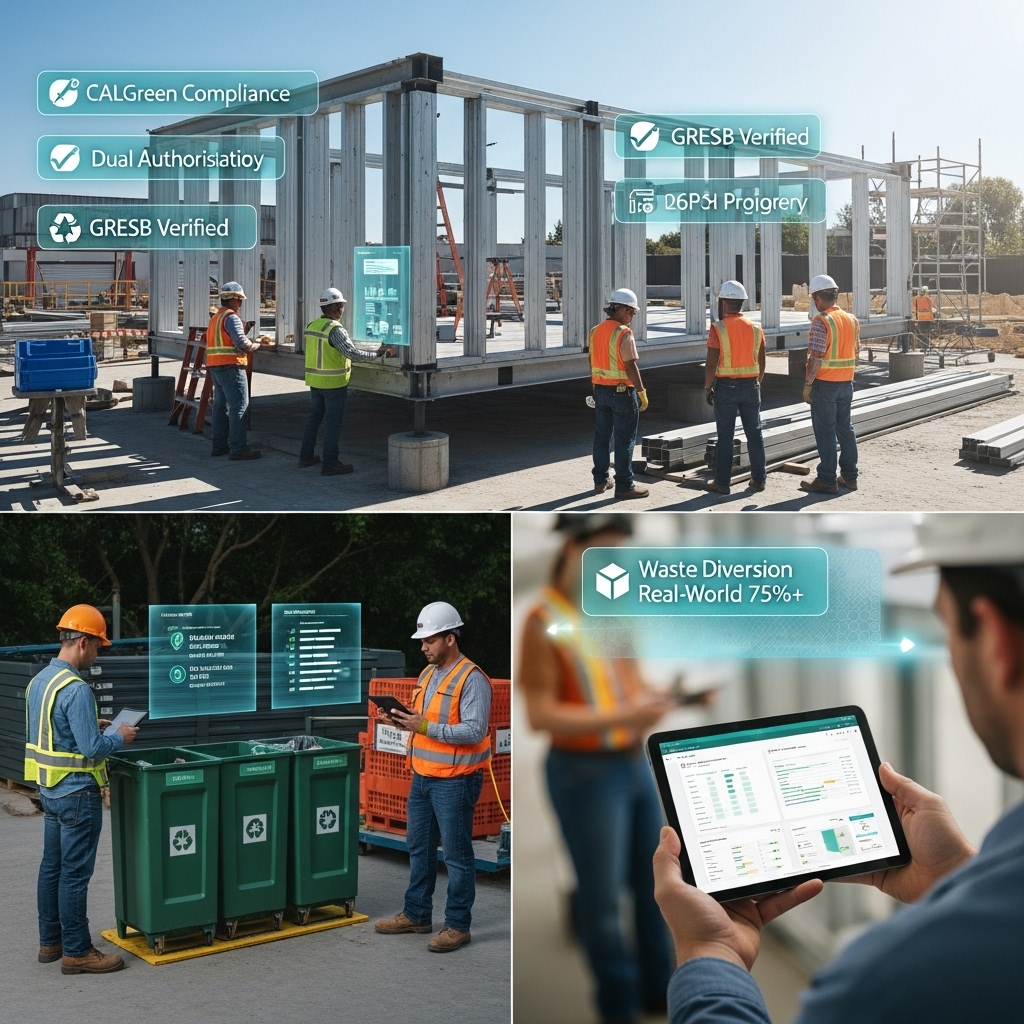
Disciplined execution is critical to translating design into operational reality, and this stage ensures our sustainable real estate development process delivers measurable outcomes. Our construction phase is governed by robust internal controls and ESG oversight across the green building project lifecycle.
- Auditable Internal Controls: We implement dual-authorization for capital, third-party inspections, and compliance checklists, providing validated data for the GRESB Development Component.
- Supply Chain and Waste Management: We partner with sustainable suppliers and meet CALGreen waste diversion standards, addressing SASB’s supply chain management topic.
- Prefabrication and Efficiency: Prefabricated systems like LIVIO Steel reduce labor and weather risks, resulting in predictable budgets and timelines—key for institutional investors.
Stage 5:

Project Delivery & Lifecycle Management
The final stage centers on verifying performance and maximizing long-term value. Our commitment to transparency extends throughout the operational phase, delivering clear, data-driven insights.
- Rigorous Commissioning and Verification: All systems are commissioned and independently validated (HERS, CALGreen), proving our assets deliver sustainability as promised.
- Data-Driven Operational Management: Smart energy management enables continuous data collection on energy, water, and waste, seamlessly integrating with the https://www.gresb.com/nl-en/ Performance Component for ESG benchmarking.
- Transparent Investor Reporting: Investors receive annual audited financials and quarterly performance reports, ensuring a full view of financial and non-financial results in sustainable investment real estate development. Verified low operating costs and resilience systematically create a “green premium” for enhanced asset value.
Conclusion:
A Platform for Investor Confidence
Our sustainable real estate development process is an integrated system of governance, risk mitigation, and value creation. By aligning each stage with global standards like GRESB, SASB, and the UN SDGs, we deliver a transparent, auditable platform for capital deployment. As a Palmdale sustainable development firm, our disciplined execution in sustainable investment real estate development inspires investor confidence and delivers outstanding risk-adjusted returns. Our proven expertise in ESG real estate development California positions Green Energy Estate Fund LLC as a benchmark for sustainable growth and institutional-grade transparency.